Stockcross Coal Club Book
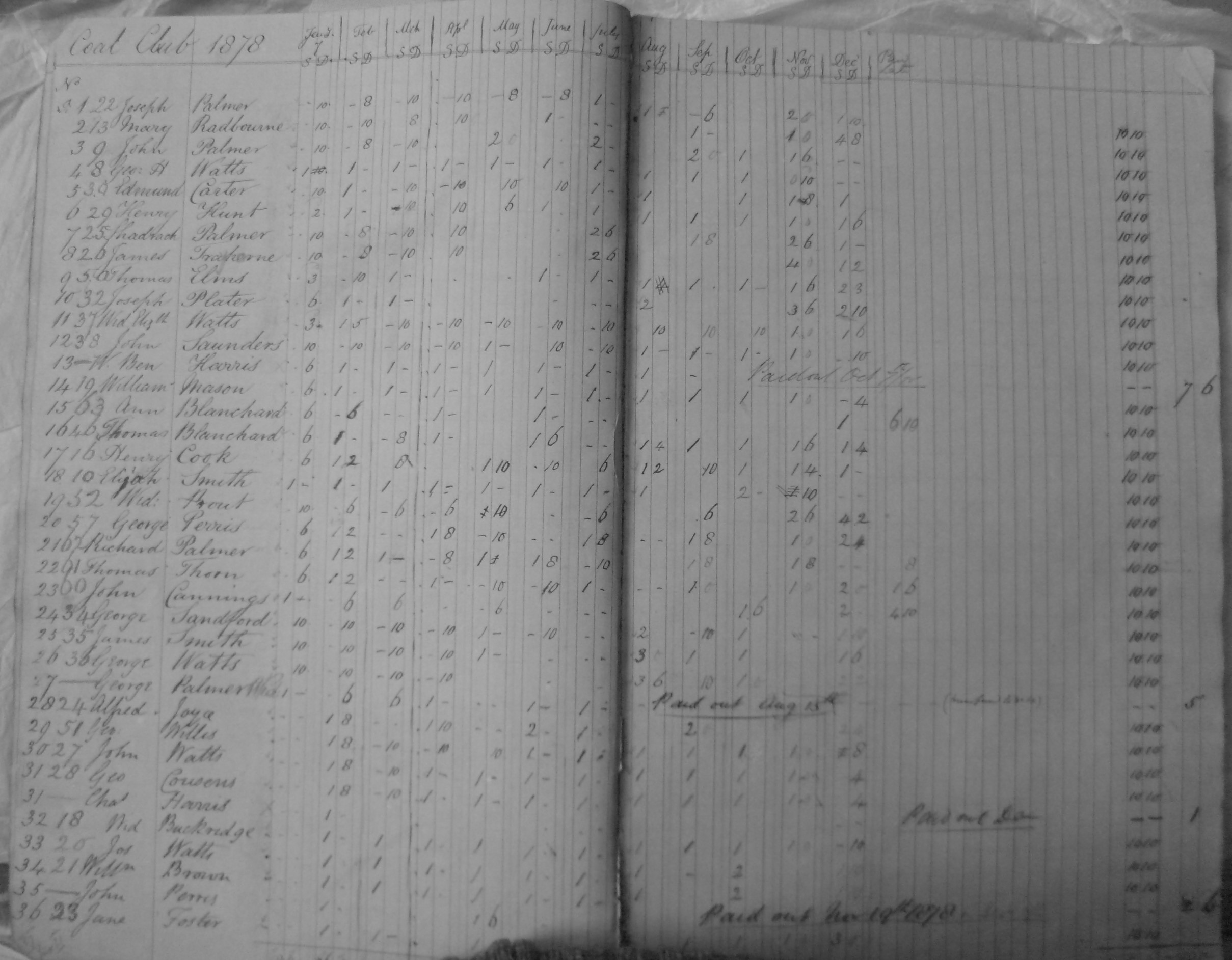
In the Stockcross church archives are several very interesting books showing small snippets of life in Stockcross and Marsh Benham in the later part of the 19th century. Two books contain the records of the Sunday School Shoe club and the Women’s’ Clothes Club . Another one contains the records of the Coal Club from 1874 to 1900.
There had been a coal club since about 1835 as suggested by an entry in the
Newbury Weekly News and General Advertiser 2nd January 1873
“A collection was made at St John’s church Stockcross after the morning service on Christmas day in aid of the Parochial Coal Club. The sum collected was £7. This is one of the many useful and benevolent schemes originated by the late Vicar of Speen, the Rev H.W. Majendie, for supplying the wants and adding to the comfort of his poor parishioners. It has been in existent for about 30 years and annually supplied about 150 families with half a ton of coal each year.”
From a note found in the book there appears to have been some qualifications necessary to allow membership of the Coal Club but it is not known what these might have been. Looking at the records the members paid weekly. In 1874 the sums were recorded weekly in the book but in the following years they are recorded monthly. There are 3 unnamed books in the archive and it is probable that further research will show one of these to be detailed payments for the Coal Club. Each year the members’ names were listed in the book and the members were give a card recording the cash they paid in. Each card was numbered, this number was recorded, usually in red, on the annual page. There doesn’t appear to be a system for numbering the names in the book and these numbers don’t correspond to the record card numbers, so the names may just have been recorded as they joined each year. Over the year monies were collected and paid into a National Savings Bank account that paid interest, by December the sum of 10 shillings and 10 pence was reached for each member.
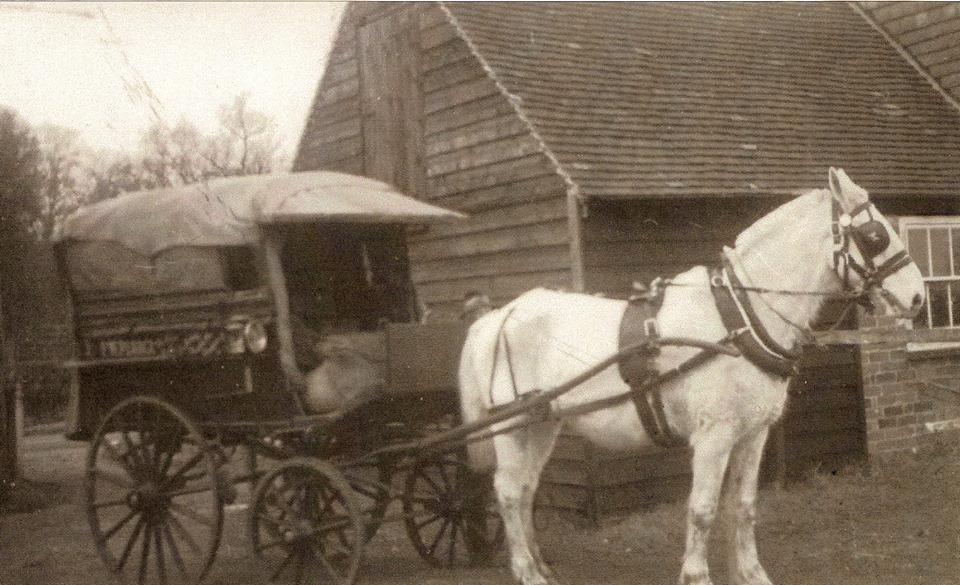
The purpose of the club was to pay for a delivery of winter coal to each member. In the years where the information was given this was usually 14 or 15 hundredweight. Most years there were a few people who didn’t manage to reach the required 10s/10d and the money was usually refunded to them in cash although sometimes it was transferred to the Shoe or Clothes Club.
The sum of 10/10d was not enough to pay for 14/15cwt of coal with its transport and weighing and the deficit was made up from other sources. The bank interest, a charitable donation £10 each year from Sir Richard Sutton or his trustees, to this was added enough money from the Christmas Service collection each year to make up the difference. In the 1870’s the cost of the 14cwt of coal was on average 14s/7d so by saving the 10s/10d during the year each member had around a 3s/9d bonus added to the saved monies.
The number of members varied over the period as did the number of those who failed to reach the magic amount of 10s/10d.
Looking at the names of the members over the 26 years there are at least 17 people who are in the Coal Club over 20 years and one person Moses Shaw of Marsh Benham was a member over the whole period. There are a few loose sheets of paper from around 1898 that give an indication of where some of the villagers lived. The census returns do not give much indication where people were living in the village so the information on these loose sheets might throw light on how the census was conducted around the village.
Sometimes the names of the coal suppliers are given, John Goddard in 1875 and 76, W Head in 1873 and 1874. J Adey & Sons 1885 to 1899 and Messrs Piggot in 1900.
The 1870’s was a period of agricultural depression with bad harvests and a drop in grain prices because of cheaper USA prairie grain being transported to Britain. This caused rural poverty and a depopulation of rural areas. This must have had an effect in Stockcross and Marsh Benham. The Stockcross Working Men’s club was in 1878 operating a cooperative bulk buying system of essentials like tea, they also bought coal and sold it to WMC members at cost price. The Reading Mercury 2nd February 1878 mentions in an article that among other goods 183 tons of coal were purchased by members. What effect that had on the Coal Club is not known. How long this cooperative system was in use would make another interesting line of research.
Members can access more information with the full excel spreadsheet or view photographic images.