1939 Register for England and Wales
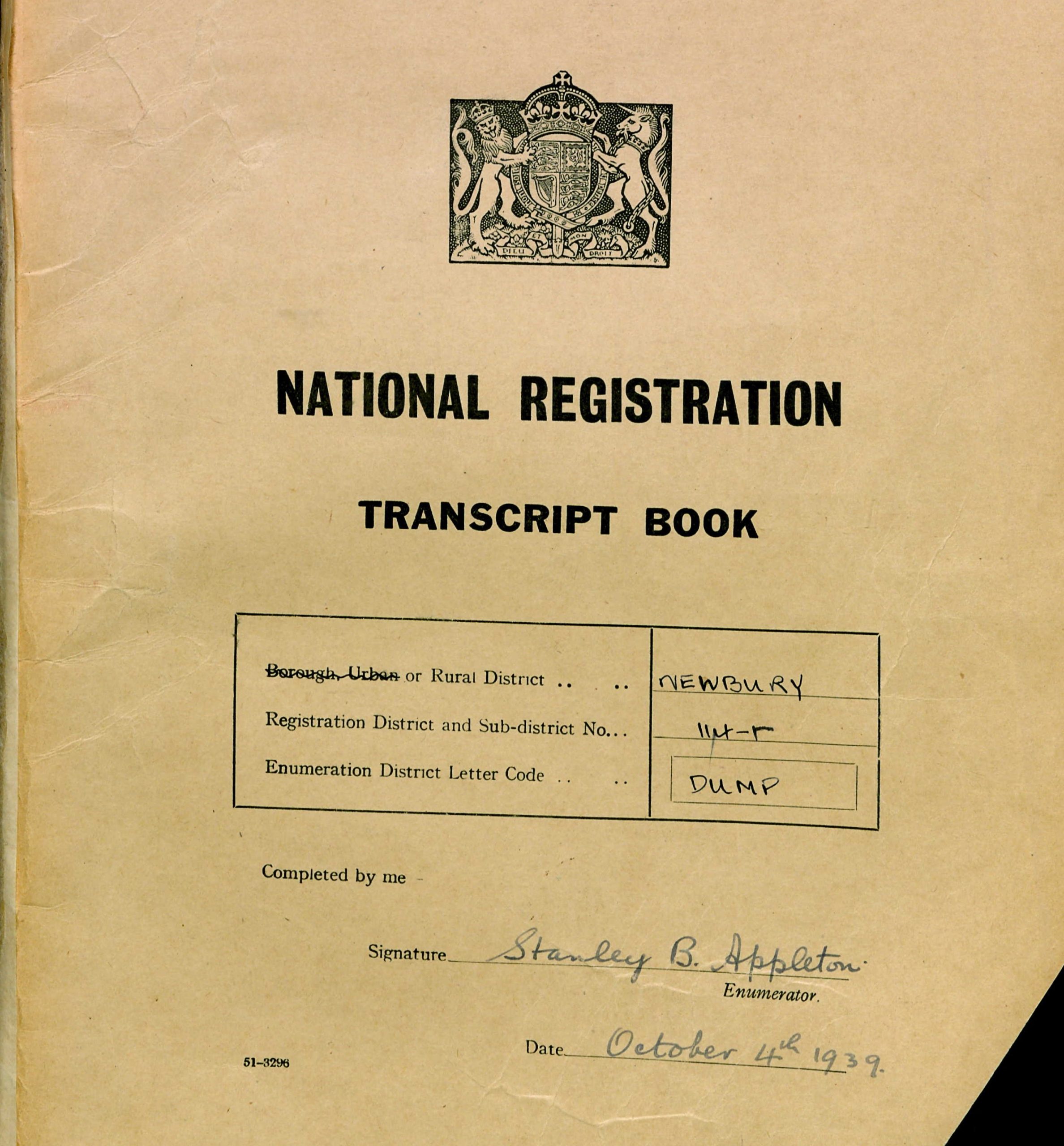
World War 2 was declared on the 1st September 1939, the National Registration Act was introduced as an emergency measure to establish a register which was to begin operation on the 29th September 1939. This was used to identify those who were to be called up into the armed forces, to produce identity cards and, once rationing was introduced in January 1940 to issue ration books.
Originally householders were given a schedule to complete and these documents did show the middle names of occupants but when these details were then transferred by the enumerator into the register the first name only was shown in full and any other middle names only by initials.
The schedule required Postal address, householder name, description of establishment other than a private dwelling. Surname and other names, sex, birth day and month and year, condition as in single, married, widowed, divorced. Personal occupation which was to be precise, not machinist but wood machinist, not labourer but builder’s labourer
It was a working document amended and annotated as people married moved. Sometimes a woman’s surname is crossed out and another surname written in, usually because she had married. Sometimes there are also dates numbers and letters which could be marriage dates, sometimes these alterations obscure the previous names which may lead to discrepancies.
Because of the data protection the names and details of people whose date of birth is less than 100 years ago are shown as closed, so those born after 1920 and so could be alive are redacted.
On the right hand side you can sometimes see notes such as ARP warden, or Red Cross or military notes. Occasionally the date of death is recorded or alias recorded as Harry noted with Henry
As the 1931 census was destroyed by fire during WW2 and no census was taken in 1941 this register provides social and family history researchers a snapshot of the civilian population in England and Wales and provides the most complete survey between 1921 and 1951 available.
Some of the occupations might need your further research– such as
Estate Agent— not a seller of houses but working in management of Sutton Estate.
Truby King- – A method of baby rearing imposing rigid routine, and improving nutrition.
Lengthman – member of a gang of responsible for laying and maintaining lengths of railway tracks.
1939 register Hoe Benham area 30th Jan-converted
1939 England and Wales Register 27th Jan-converted-pages-deleted (1)